Which trees need to come down?
Most of the trees people call us about fall into a few groups:
- Dead or dying trees. A dead pine dries out and gets brittle fast in a Georgia summer. Limbs start dropping before the trunk goes, and a tree that has started dropping branches on your fence or shed is telling you it is time.
- Trees over the house. Limbs over the roof, the gutters or the carport, or a whole trunk leaning that way.
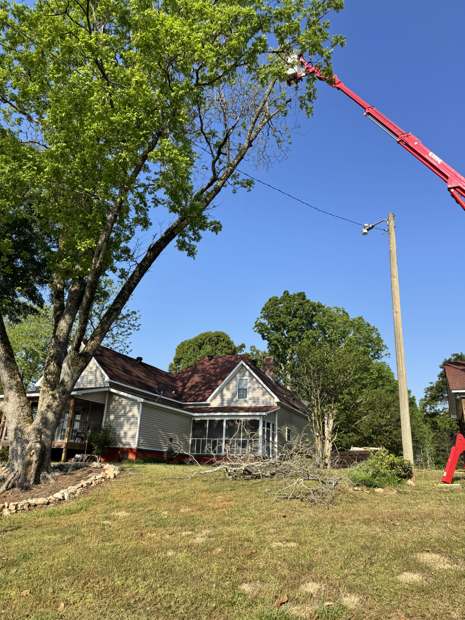
- Trees near power lines. The line coming into your house is your side to deal with. Keep yourself and your ladder away from it.
- Storm damage. A split trunk, a hanger caught in the canopy, a tree half on the ground. See storm and emergency work.
- Trees in the way. A new driveway, a shop, a pool, or a yard that will not grow grass because the trees take all the light and water.
If you are not sure, call and ask. Bobby will tell you straight whether a tree needs to come down or just needs a trim.
How we take a tree down close to the house
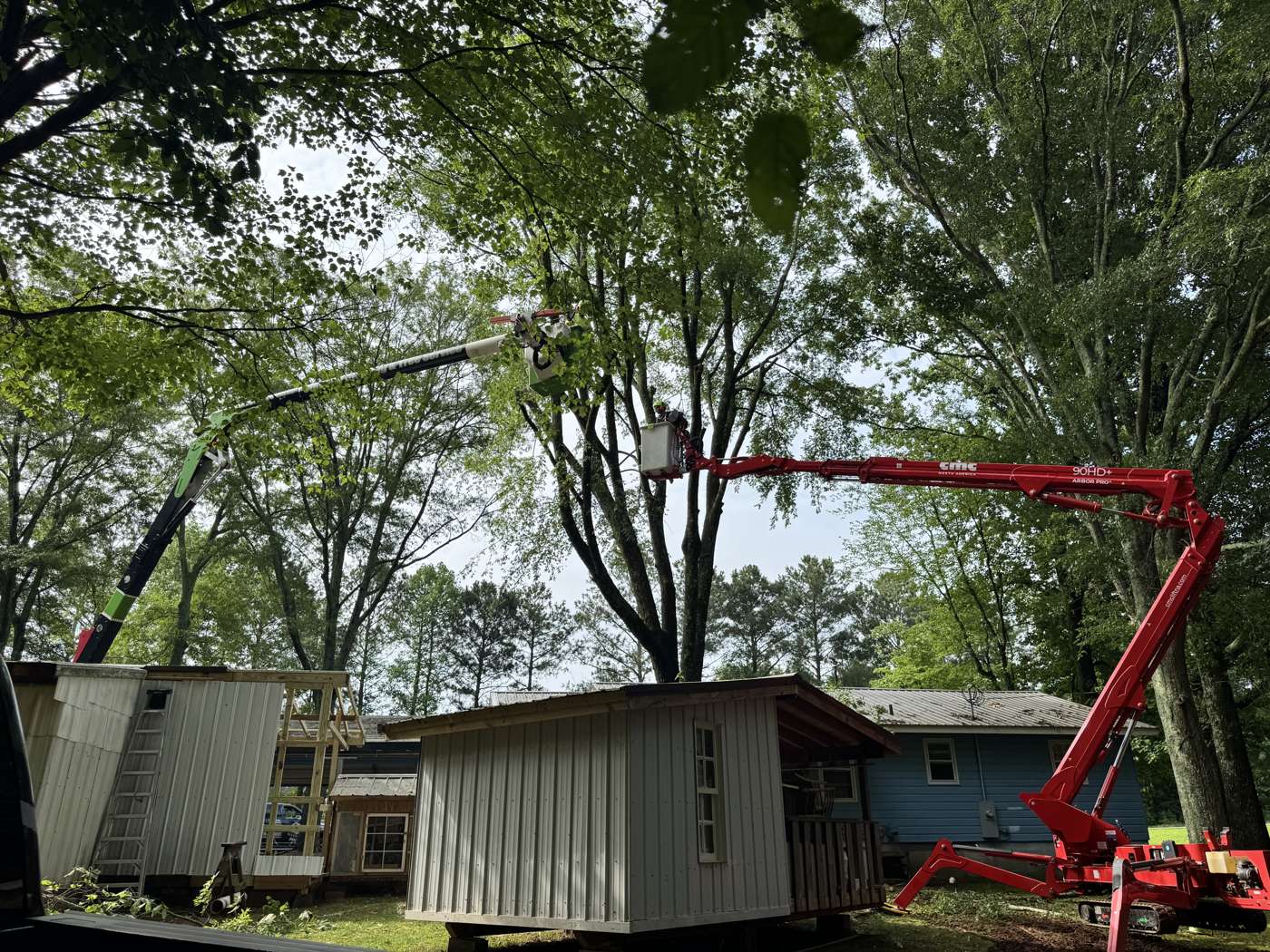
Most removals in town are not open-field felling. The tree is between two houses, over a shed, next to a walk bridge, or in a corner of the back yard you can barely walk into. That is where the equipment matters.
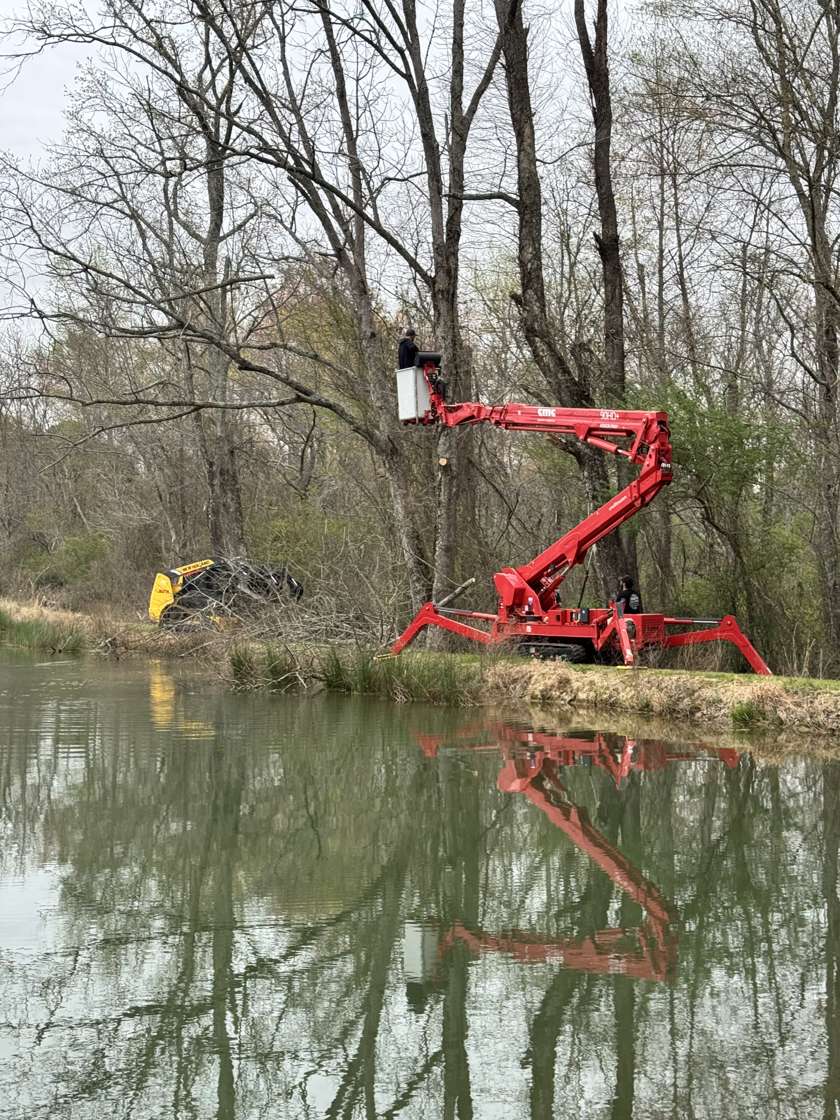
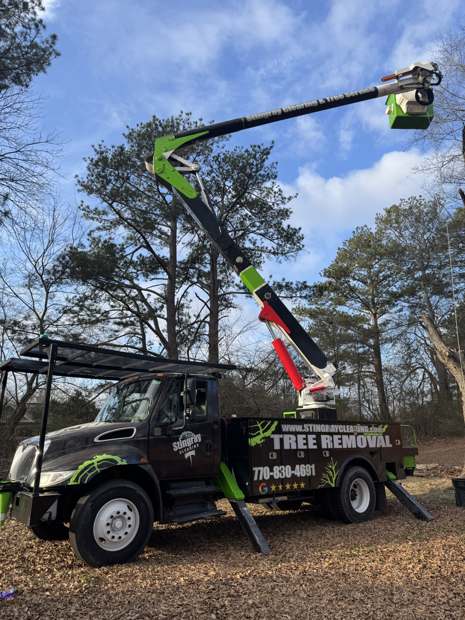
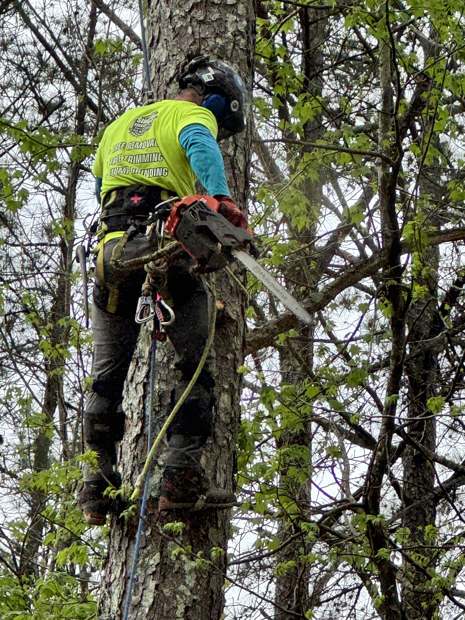
The crew runs a red tracked spider lift that walks through a gate and sets up on a lawn without a truck, a black and green bucket truck for street-side work, skid steers to move the wood, and climbers for the trees no machine can reach. The tree comes down in pieces, from the top, each piece lowered or dropped where it was planned to land.
One customer put it this way: “Not a single branch dropped anywhere they didn’t plan it to drop.” Another had a huge dead oak “stuck in a tiny, really tight and difficult corner of our back yard next to our workshop”, and the crew had it down in a little more than an hour.
What does tree removal cost?
Every job is priced after Bobby sees it, and the estimate is free. What moves the price:
- Size. Height and trunk width set how much wood there is to cut and move.
- What is under it. A tree over a roof or a line takes rigging and time. A tree in an open field can just be felled.
- Access. Whether the lift or the truck can get to it, or a climber has to.
- Condition. Dead wood breaks unpredictably and is slower to work safely.
- Cleanup and stumps. Hauling everything off, leaving firewood, and grinding the stump are all part of the quote, your choice.
- How many trees. Several trees on one visit cost less each than several visits.
Customers bring up price a lot in the reviews: “fair price”, “very reasonable rate”, and one who had 33 pines taken down said the price was “Thousands and Thousands $$$ lower than another local tree service.” You get a firm number before any work starts.
What happens to the wood
Very little of it ends up in a landfill. Good logs from Stingray jobs go to Bobby’s own sawmill and come back as slabs and lumber. Smaller wood becomes firewood, chips and mulch. If you want to keep some for your own firewood, say so when you get the estimate.