
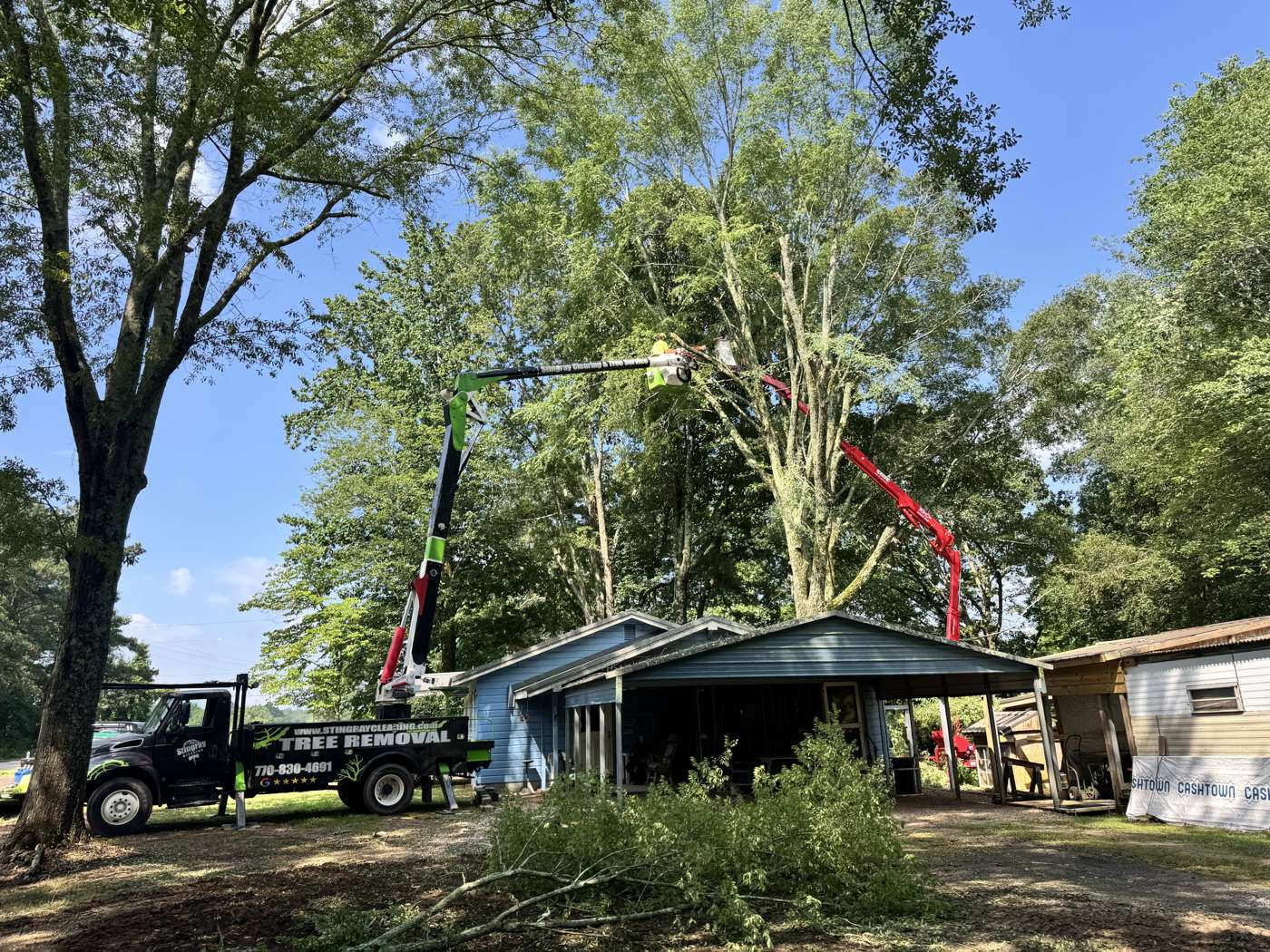
When a tree needs trimming instead of removal
A healthy tree with a few bad limbs does not need to come down. Trimming is the right call when:
- Limbs touch or hang over the roof. Branches on shingles hold moisture, drop leaves in the gutters and let moss grow. One customer had limbs “touching the roof causing moss to go.”
- Dead limbs are hanging in the canopy. They come down in the next wind, usually on something.
- Branches are growing into the service line to the house, or over the street or the drive.
- The yard is too shaded to grow grass, and opening the canopy would fix it.
- A tree is lopsided or top-heavy after a storm took one side.
How the crew trims a big tree
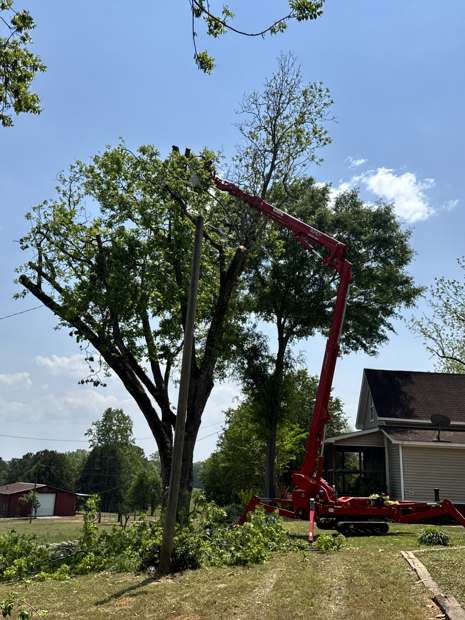
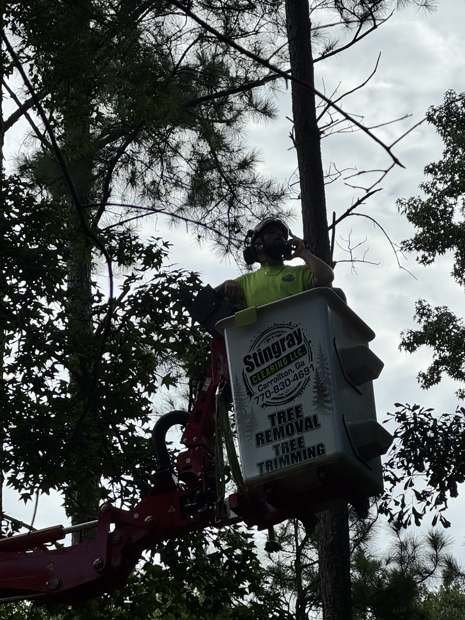
For a tall pine or oak, the crew uses the spider lift or the bucket truck so the climber works from a basket instead of hanging off the trunk. A good cut goes back to a branch or the trunk so the tree can close the wound, not a stub left halfway down a limb. Limbs over a roof are cut in sections and lowered so nothing lands on the shingles.
Where no machine fits, a climber goes up on ropes.
When is the best time to trim?
Late winter is the usual time for shaping a healthy tree, while it is dormant and before spring growth. Dead, broken or dangerous limbs should come off as soon as you see them, in any season. Winter is also the quiet season for tree crews around Carrollton, so scheduling is often quicker from Thanksgiving to February.

What does trimming cost?
The estimate is free. The price depends on how many limbs, how high they are, what is under them, and whether the lift or truck can reach the tree. Doing several trees on one visit costs less than calling twice. Bobby gives you a firm price on the spot.